Pulse-Oximeter and Oxygen Administration
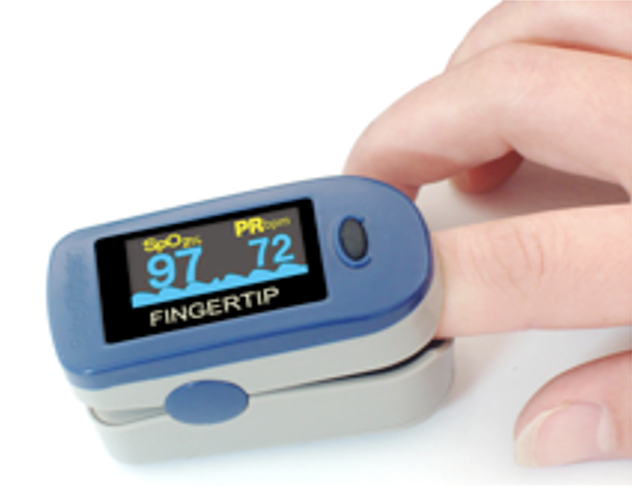
The pulse-oximeter measures the available saturations of oxygen in the circulating blood displayed as a percentage value. It is typically over 97%.
It also measures heart rate as beats per minute.
Place it on any finger and press the obvious button, in a few seconds it will provide data. Pulse-oximeters do not like being cold and wet, in such conditions place it in a pocket for a few minutes close to body before use.
In cold trauma casualties the circulation may be closed down and peripheral oxygen low. The pulse oximeter may not obtain a reading.
Assisted Ventilation
A Bag Valve and Mask (BVM) connected to oxygen may be used to assist a casualty who is breathing but requires help.
The first aider should try to co-ordinated the use of the bag valve and mask with the casualty’s breathing cycle, enriching
the oxygen intake.
Oxygen Giving Set
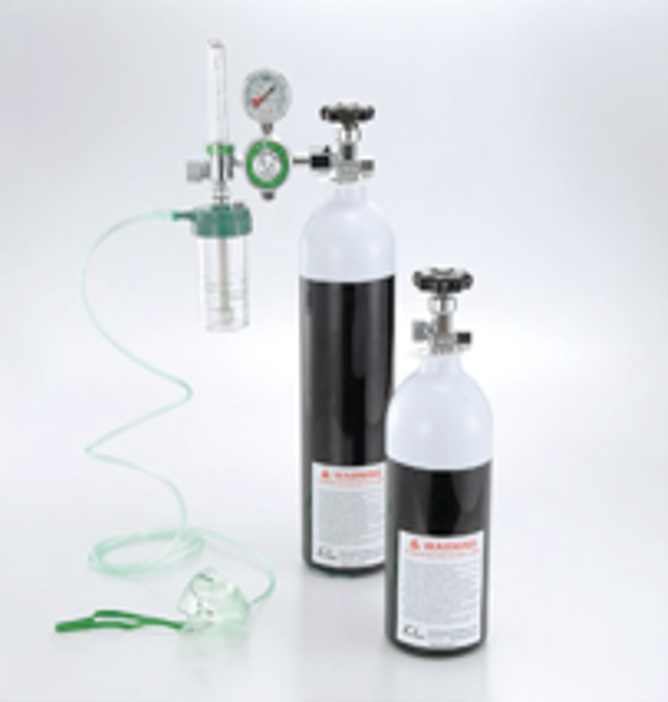
Considerations
A single cylinder may give up to 40 minutes oxygen at full flow – it may be prudent in a very remote situation to monitor delivery and reduce the flow whenever possible. Aim to maintain a pulse-oximeter reading at about 97% or above so as to maximise the length of time oxygen will be available, rather than running out completely.